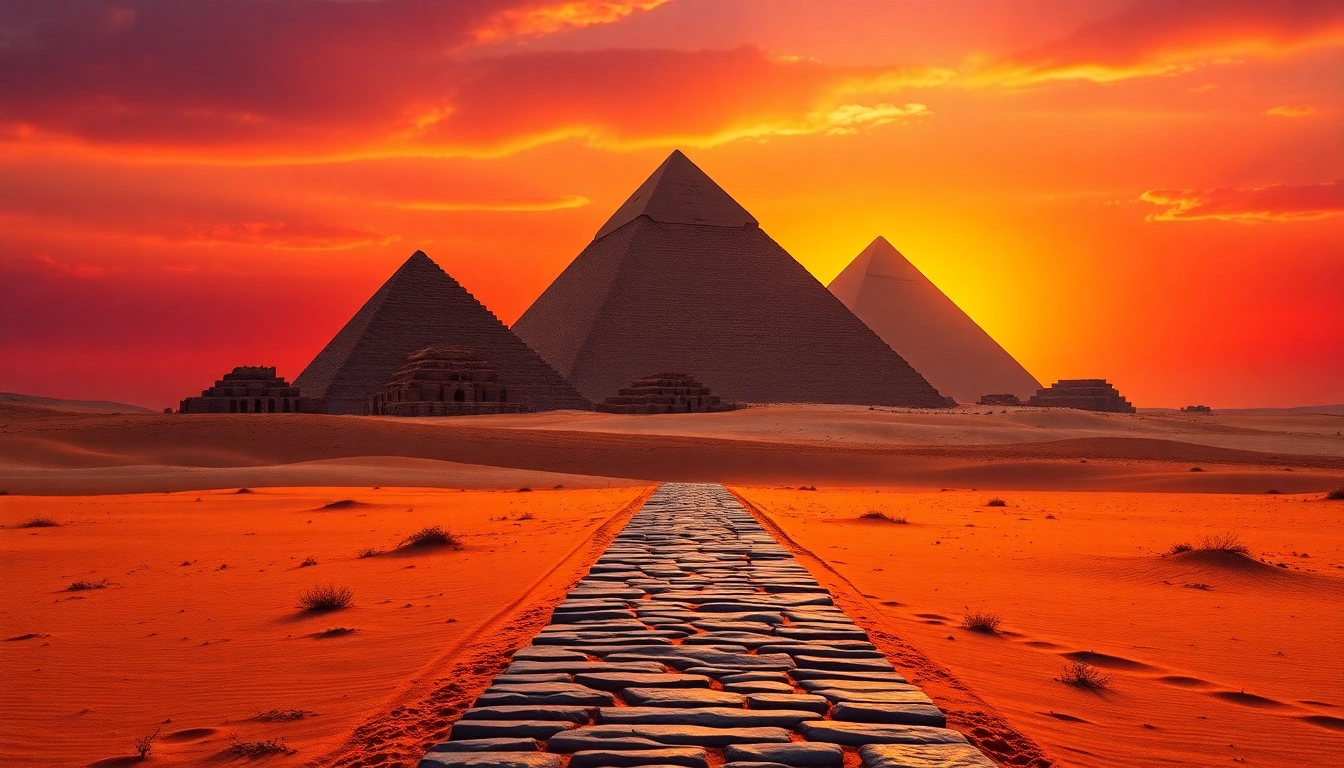
Introduction to the Great Pyramids
The Great Pyramids of Egypt, particularly the iconic Pyramids of Giza, stand as monumental testaments to ancient engineering and a civilization’s aspirations toward immortality. Their grandeur and precision have captivated historians, architects, and tourists alike for centuries. Beyond their physical presence, these pyramids represent a rich tapestry of cultural heritage, religious significance, and advanced architectural techniques. A virtual exploration into these magnificent structures can be initiated at https://piraminds.com/, a resource dedicated to an in-depth understanding of pyramids.
Historical Significance of Pyramids
The historical importance of the pyramids cannot be overstated. Built predominantly during the Old and Middle Kingdoms of Egypt, these structures served primarily as monumental tombs for pharaohs and elite members of society. Each pyramid was a part of a larger complex that included temples, mortuary chapels, and causeways, specifically designed to honor the dead and facilitate their journey to the afterlife.
The Pyramids of Giza, including the Great Pyramid of Khufu, which is one of the Seven Wonders of the Ancient World, illustrates the immense power and influence of the pharaohs. They embody the Egyptians' spiritual beliefs that life continued beyond death, and thus elaborate and massive structures were essential for a successful journey to the afterlife.
Architectural Marvels Explained
The construction of the pyramids is a feat that still baffles researchers today. The precision with which they were built showcases not only the architectural skill of ancient Egyptians but also their advanced understanding of mathematics and astronomy. The Great Pyramid’s base aligns closely with the cardinal points and contains a complex system of chambers and passages.
Materials such as limestone and granite were sourced from nearby quarries, and the organization of labor into teams allowed for efficient construction practices. The scale of the pyramids is difficult to comprehend, with the Great Pyramid originally standing at about 146.6 meters (481 feet), making it the tallest man-made structure for over 3,800 years.
Why Pyramids Capture Our Imagination
The allure of the pyramids extends beyond their physicality; they embody mysteries—both historical and architectural. Each stone that forms these grand edifices prompts questions about the ingenuity of the builders and the civilization that constructed them. Their enduring presence speaks to humanity's quest for immortality and achievement.
Literature, films, and art continually draw inspiration from these structures, perpetuating their mystique. The pyramids serve as a backdrop for countless theories ranging from ancient alien interventions to the hidden chambers still awaiting discovery, all adding to the fascination surrounding them.
The Construction Techniques of https://piraminds.com/
Materials Used in Pyramid Construction
The construction of the Great Pyramids involved a remarkable array of materials. The primary building material, limestone, was quarried locally and formed the outer casing stones, while granite was used in the inner chambers. Each layer of the pyramid was meticulously planned and laid to ensure structural integrity and rotational symmetry.
In some cases, mudbrick was used for the core, which, though less durable, allowed for faster construction. Additionally, the use of copper tools for quarrying and shaping stones indicates a level of technological advancement that further underscores the achievements of ancient Egyptians.
Labor Force and Techniques Employed
The labor force behind the pyramids comprised skilled tradesmen, laborers, and a substantial support system of workers. Contrary to the common myth that the pyramids were built by slaves, evidence suggests a workforce sourced from across Egypt, who were likely well-fed and cared for during construction.
The techniques they employed included the use of sledges to transport heavy stones and levers to position them into place. Studies suggest that water may have lubricated the sands to reduce friction, allowing for easier movement of these massive blocks.
Modern Theories on Construction
Modern archaeological and architectural research has led to numerous theories that seek to explain the construction methodologies of the pyramids. From the use of a straight or circular ramp system to the possibility of internal ramps, theories continue to evolve with every new discovery. Remote sensing technology and digital modeling have also provided deeper insights into the spatial organization of the Giza pyramids.
Furthermore, recent studies utilizing ground-penetrating radar have revealed potential hidden chambers and tunnels, sparking renewed interest in the mysteries surrounding their construction.
Pyramids and Their Cultural Impact
Role of Pyramids in Ancient Egyptian Society
Pyramids functioned as both funerary monuments and as a means to legitimize a pharaoh’s power and divine status. They were a demonstration of wealth, technological prowess, and the organization of labor forces, further solidifying the pharaoh's role as the intermediary between the gods and the people.
Religious rituals surrounding these structures were critical to the ancient Egyptians’ beliefs in the afterlife. The pyramids were filled with art and inscriptions intended to guide and protect the deceased into the next life, showcasing the deeply intertwined nature of religion and architecture in Egyptian culture.
Pyramids in Literature and Media
Throughout history, the pyramids have featured prominently in literature and media, fueling ongoing fascination and speculation regarding their purpose and meaning. From ancient texts that reference the grandeur of the structures to modern films and novels that explore their mysteries, the cultural footprint of these pyramids is immense.
They symbolize not only architectural and engineering achievement but also a rich narrative that continues to evolve with each new literary or cinematic representation.
Tourism and Economic Factors
The Great Pyramids of Giza are among the most visited tourist attractions globally. Their role in tourism significantly contributes to Egypt's economy, providing income not only from entrance fees but also from the broader hospitality and service industries that thrive around these iconic sites.
However, this tourism is a double-edged sword, necessitating the management of cultural heritage alongside sustainable economic practices to protect these ancient wonders for future generations.
Modern Discoveries Related to the Pyramids
Recent Archaeological Findings
In recent years, archaeology has continued to unveil secrets of the pyramids. Discoveries such as ancient artifacts, burial items, and even the remains of the workforce have provided valuable insights into life during the pyramid construction era. Such artifacts can be instrumental in understanding not only the construction techniques but also the cultural practices of the time.
Moreover, newly discovered structures and chambers suggest that the site was more complex than previously believed, with potential links to other significant sites across Egypt.
Technological Advances in Pyramid Exploration
Technological advancements have revolutionized the way archaeologists explore and understand the pyramids. Non-invasive techniques including satellite imaging and drone surveys allow for comprehensive mapping of sites without disturbing the ancient materials. These technologies have significantly broadened our capabilities in terms of analyzing and interpreting archaeological findings.
Additionally, artificial intelligence and machine learning are being applied to sift through massive datasets generated from excavations and historical records, enabling researchers to make connections previously overlooked in traditional studies.
Debunking Common Myths
Numerous myths surround the pyramids, often fueled by sensationalism and a lack of understanding. One prevalent misconception is that the pyramids were built by slaves; however, evidence points to a well-organized labor force comprised of skilled workers.
Furthermore, many theories proposing alien intervention or advanced lost technologies have been debunked through rigorous research and archaeological evidence that illustrate the capabilities of ancient Egyptians. Clarifying these myths is essential to establishing a more accurate historical narrative.
Visiting the Great Pyramids: A Comparative Guide
What to Expect on Your Visit
A visit to the Great Pyramids is a breathtaking experience that combines history, culture, and architecture. Visitors can expect to marvel at the sheer size and beauty of these ancient structures, gaining insight into the advanced techniques that led to their construction. Guided tours often provide valuable context, enhancing the experience with stories of ancient Egyptians and their societal beliefs.
It is advisable to wear comfortable clothing and footwear, as the site covers a large area requiring considerable walking. The best times to visit are early morning or late afternoon to avoid peak tourist hours and extreme heat.
Must-See Features Around the Pyramids
While the pyramids are the main attractions, several other features are worthwhile, including the Great Sphinx, the solar boat museum, and the myriad of smaller pyramids and tombs nearby. Exploring these sites offers a more comprehensive understanding of the complex that served as a focal point for both cosmic and earthly concerns of the ancient Egyptians.
Visitors can also engage in various activities such as camel rides or attending sound and light shows that narrate the history of ancient Egypt, adding a vibrant layer to the overall experience.
Planning Your Tour via https://piraminds.com/
For those interested in organizing a visit to the Pyramids, various resources are available for creating an ideal itinerary. Experienced planners can guide tourists on navigating the site effectively while ensuring that key features are highlighted, thus maximizing the visit's value. Comprehensive planning also includes considering accommodation options, local cuisine, and transportation to and from the site, ensuring a seamless experience that does justice to the grandeur of the Great Pyramids.
Frequently Asked Questions
1. How were the pyramids built?
The construction involved skilled laborers using simple tools and techniques, including sledges, ramps, and levers. Modern theories suggest that organized labor and advanced planning enabled the effective transport and placement of massive stone blocks.
2. Are the pyramids aligned with the stars?
Yes, many pyramids, including the Great Pyramid, exhibit alignments with celestial bodies, particularly the North Star, which reflects the ancient Egyptians' understanding of astronomy and cosmology.
3. Can you enter the pyramids?
Visitors can enter some of the pyramids, such as the Great Pyramid, but entry is often limited in terms of time and space, and it’s important to follow site regulations during exploration.
4. What is the significance of the Sphinx?
The Great Sphinx is believed to embody the pharaoh's strength and wisdom, serving as a guardian to the pyramids, symbolizing protection and power in the ancient world.
5. How has tourism affected the pyramids?
While tourism has significantly contributed to the Egyptian economy, it has also posed challenges in preserving the pyramids. Sustainable practices are essential to protect these ancient structures while facilitating public interest and education.